AI Image Generation vs Stock Photos: What's Better for Your Brand?
The practical tradeoffs between generating original images with AI and licensing from stock libraries, and when to use each.
Two years ago this question barely existed. Now it's one of the most common decisions creative teams face. Here's the honest breakdown.
When AI generation wins
Unique, on-brand visuals at scale
Stock libraries recycle the same images across thousands of brands. AI generation gives you images no one else has, and SPARK's Images module offers style presets (cinematic, flat illustration, oil painting, and more) to keep your generated visuals consistent across a campaign.
Rapid concept testing
Need five different visual directions for an A/B test by tomorrow? AI delivers. Stock search for something this specific could take hours.
Avoiding licensing complexity
AI-generated images (via SPARK's built-in tool) come with a clean, simple commercial licence. No model releases, no editorial restrictions, no 'image may not be used in association with tobacco products' fine print.
When stock photos win
Real people in real situations
AI humans are improving fast, but for anything requiring genuine authenticity, like a real doctor with a real patient or a real athlete mid-performance, stock photography is still better. AI tends to get hands wrong, jewellery wrong, and background detail wrong in ways that undermine trust, but it is improving daily!
News and editorial content
Editorial use of AI-generated images without disclosure is increasingly considered misleading. For news, PR, and editorial content, stick with real photography.
Speed when the image type is common
Need a smiling person at a laptop? Stock returns a relevant result in 10 seconds. Generating the same image with AI and iterating to get it right could take 15 minutes.
The hybrid approach
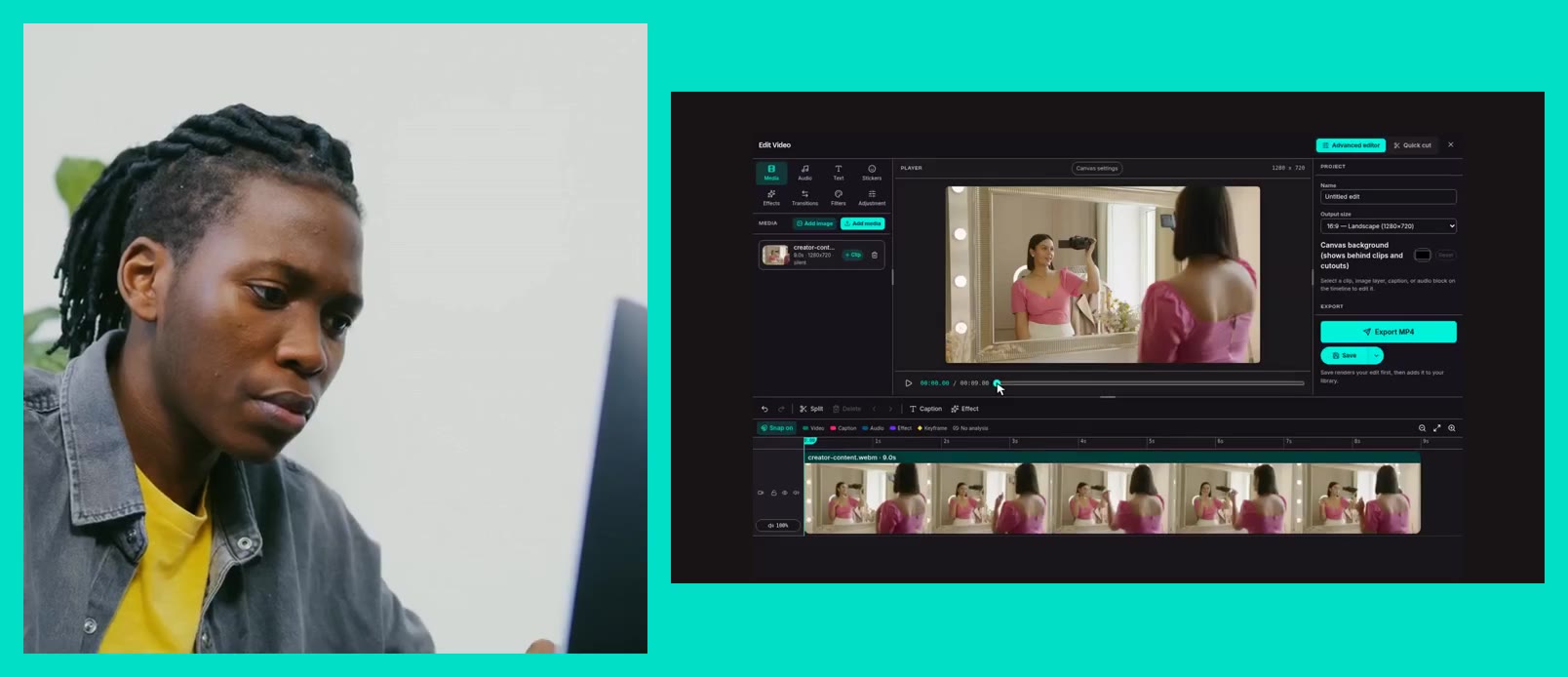
The strongest creative teams use both. Stock for people, real environments, and journalistic contexts. AI for abstract visuals, brand-specific compositions, and concept art. SPARK's Images module puts both in one place. Search free and paid stock libraries and run AI generation from the same interface.
Always run AI-generated images through a quality check before publishing. Look especially at hands, text in the image, and background symmetry. These are the most common failure points.